
"coffee origin map"
700 article(s) found
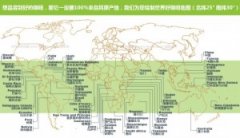
Types of boutique coffee beans world-famous boutique coffee beans and their producing area distribution map
World Fine Coffee Map Latin American Coffee beans (Central and South America) Brazil: Santos, Bahia, Cerrado, Mogiana Mexico: Coatepec, Huatusco, Orizaba, Maragogype, Tapanchula, H

Sweet and smooth Coffee Bean planting Base Map location conditions Brand Taste and Flavor description method
Brazilian coffee beans introduce that Brazilians love to drink coffee and are good at drinking coffee. Coffee with hot milk is a traditional breakfast drink throughout Brazil. Brazilians call breakfast morning coffee (cafedamanha). They drink coffee before going to work, during meetings, and often stand in front of a street cafe for a drink when walking down the street. In short, coffee is an indispensable energy for most Brazilians.
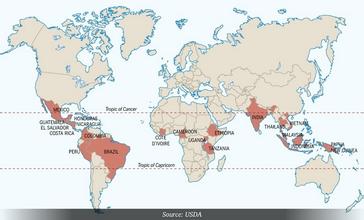
The World Coffee Map explains in detail the specific distribution points and geographical names of the world coffee map.
Costa Rican coffee has full grains, ideal acidity and unique strong aroma. Tarrazu of Costa Rica is one of the major coffee producing areas in the world. Costa Rica, with its fertile volcanic soil and good drainage, is the first country in Central America to grow coffee and bananas for commercial value. Coffee and bananas are
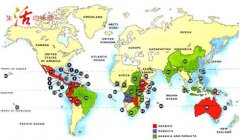
Map of global coffee producing area for the production of boutique coffee beans
Coffee trees grow in tropical or subtropical agricultural gardens centered around the equator and called coffee belts. Most of the coffee production is between the Tropic of Cancer, 25 degrees north of the tropical or subtropical equator and 30 degrees south of the equator. An area with an annual average temperature of 16-25 degrees Celsius, no Frosts Descent and rainfall of 1600-2000 mm.
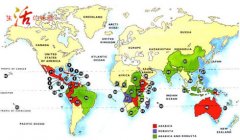
Analysis of global coffee producing area map analysis of coffee bean production area
Coffee trees grow in tropical or subtropical agricultural gardens centered around the equator and called coffee belts. Most of the coffee production is between the Tropic of Cancer, 25 degrees north of the tropical or subtropical equator and 30 degrees south of the equator. An area with an annual average temperature of 16-25 degrees Celsius, no Frosts Descent and rainfall of 1600-2000 mm.
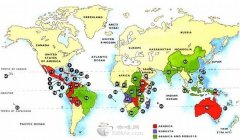
Basic knowledge of Coffee training Global Coffee producing area Map
Coffee trees grow in tropical or subtropical agricultural gardens centered around the equator and called coffee belts. Most of the coffee production is between the Tropic of Cancer, 25 degrees north of the tropical or subtropical equator and 30 degrees south of the equator. An area with an annual average temperature of 16-25 degrees Celsius, no Frosts Descent and rainfall of 1600-2000 mm.

Coffee bean producing area map of African coffee bean producing area has characteristics of coffee
Democratic Republic of the Congo: Kivu, Ituri Rwanda: Kivu Kenya: AA, Kenya AA Oreti Estate, Uganda: Elgon, Bugisu, Ruwensori Zambia: Kasama, Nakonde,
Global coffee producing area map coffee bean producing area
1. Costa Rica Costa Rica 2. Cuba Cuba 3. Dominican Republic Dominican Republic 4. Ei Salvador El Salvador 5. Guadeloupe Guadeloupe 6. Guatemala Guatemala 7. Haiti Haiti 8. Honduras Honduras 9. Jamaica Jamaica 10. Martinique Martinique 11. Mexico Mosi
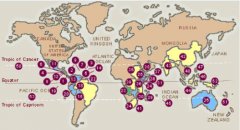
Introduction of Coffee beans Distribution Map of Coffee growing areas in the World
1. Costa Rica Costa Rica 2. Cuba Cuba 3. Dominican Republic Dominican Republic 4. Ei Salvador El Salvador 5. Guadeloupe Guadeloupe 6. Guatemala Guatemala 7. Haiti Haiti 8. Honduras Honduras 9. Jamaica Jamaica 10. Martinique Martinique 11. Mexico Mosi

Spice and fruit-flavored Ethiopian Bancimaji boutique coffee beans Origin, Development, History and Culture
Bench Maji, located in southwestern Ethiopia and not far from neighboring Sudan, is easy to find using Google map. Although the flavor of Banchimaji Gesha Estate is different from that of Panamanian Geisha, it is still worth tasting. It is rare in many regions of Ethiopia, because of its varied flavor of spices and fruits.

Introduction to the method of describing the taste and flavor of the brand with the characteristics of the map of coffee bean planting base in Brazil
Although Brazilian coffee beans have a variety of coffee, Brazilian coffee is suitable for the taste of the public. For example, coffee produced in the northern coastal areas has a typical iodine taste, reminiscent of the sea after drinking. This coffee is exported to North America, the Middle East and Eastern Europe. Today, Brazil has established its brand as the origin of special coffee, while Brazil, which has many of Brazil's most important producing area members,

About the powder quantity distribution map of the bean mill-how to mix the powder with the mazzer bean mill
About the powder distribution map of the bean mill-mazzer bean mill how to adjust the whole production process, and with advanced technology and meticulous quality control in about factory production. 7000 square meters. At Gardigiano in Pierre (Venice). Mazzer Appliances is distributed in more than 70 countries and has won considerable attention, including the famous brand VDE (European market) related to food safety and compatibility.
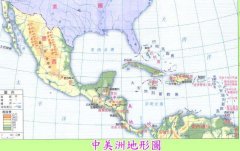
Learn more about the description of Central American boutique coffee on the coffee map.
Central America is a land bridge connecting North and South America. There are seven countries, namely, Belize, Costa Rica, El Salvador, Guatemala, Honduras, Nicaragua and Panama. Seven Central American countries all produce coffee, with Guatemala, Costa Rica and Honduras among the top 10 coffee exporters in the world. Coffee started in Central America in the 18th century, an important economy.

Brazilian Coffee Bean planting Base Map-introduction of Brazilian Bourbon Rivida Coffee beans
Brazilian Coffee Bean planting Base Map-Brazilian Bourbon Rivida Coffee Bean introduction Top Brazilian coffee may not always be easy to get. Because, after the United States, Brazil itself has become the world's largest consumer of coffee and is still growing rapidly. A large number of high-quality coffee has found a place in the domestic market, and consumers' tastes are becoming more and more critical of Brazil's long hair in the coffee industry.

Coffee World Map-Guatemala Flavor Characteristics, Growing Environment and Awards
Professional barista exchanges, please pay attention to coffee workshop (Weixin Official Accounts cafe_style ) Guadi is the nickname of coffee friends for Guatemala (also translated Guatemala). This Mayan city sits atop 37 volcanoes, two of which erupted in 2010. With frequent tornadoes and natural disasters everywhere, it is a veritable dangerous place. But fertile volcanoes
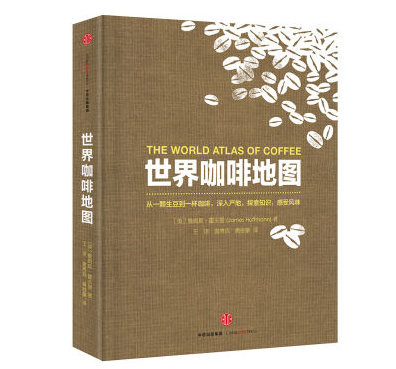
Coffee book recommendation: "World Coffee Map" the World Atlas of Coffee
English title: world Coffee Map original title: the World Atlas of Coffee author: James Hoffman (UK, James Hoffmann) Citic Publishing wrote in the front words: in this way, it is a 2014 book. At that time, I was attracted by the appearance and content of the book. I couldn't wait to write the impression after reading it. What I didn't know at that time was that thinking about it would reverberate. Two years

Introduction to the varieties of Grinding scale of Brazilian Coffee Bean planting Base Map Flavor description processing method
Brazil's brand as the origin of special coffee has been established, while the Brazilian Special Coffee Association (BSCA), which has many of Brazil's most important producing area members, represents the interests of the world's top coffee growers and the most advanced coffee production technology. Take Misrachillas as an example, for several years in Serbia

Introduction to the description and treatment method of Manor Environment and Flavor in the characteristic Map of Coffee Bean planting Base in Brazil
Introduction of Brazilian coffee beans in Brazil, the largest production is Robbins coffee. This kind of coffee is sold in the supermarket. Brazil's Robucht coffee, sold under the name Conillon, accounts for 15 per cent of total production. Old bourbon coffee is grown on some estates in the Serrado district of Minas Greais state in southeastern Brazil. These estates, such as Capub.

Coffee Belt (COFFEE WORLD MAP) Coffee trees grow around the equator
Coffee trees grow in tropical or subtropical agricultural gardens centered around the equator and called coffee belts. Most of the coffee production is between the Tropic of Cancer, 25 degrees north of the tropical or subtropical equator and 30 degrees south of the equator. An area with an annual average temperature of 16-25 degrees Celsius, no Frosts Descent and rainfall of 1600-2000 mm. At present, coffee is mainly produced by seven countries.